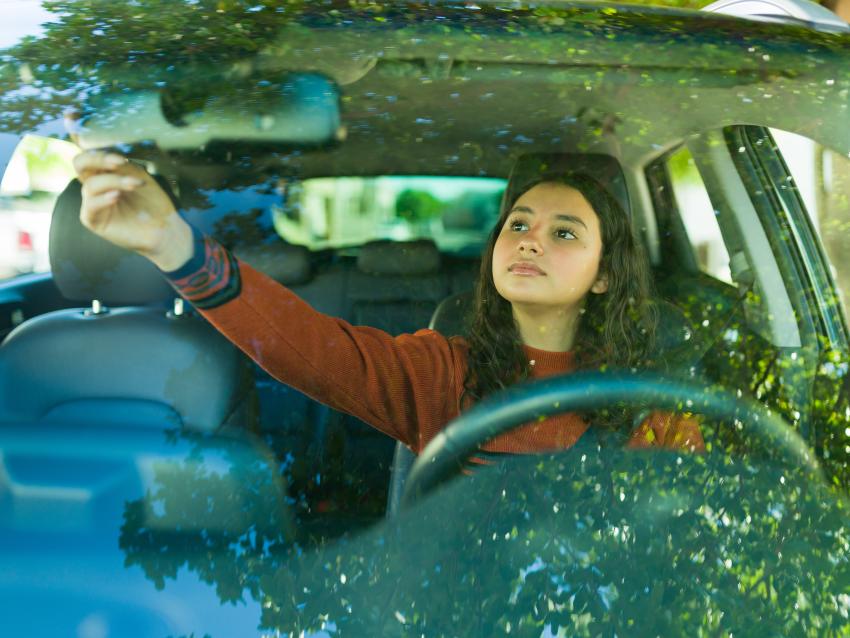
Open conversations and clear rules can help keep teen drivers safe
According to the Kentucky Injury Prevention and Research Center, motor vehicle traffic crashes were the leading cause of injury-related death among Kentucky teens ages 12–17 from 2021–2024. National Teen Driver Safety Week, observed Oct. 18-24, is an opportunity for Kentucky families to discuss the risks facing new drivers and establish habits that can help teens stay safe behind the wheel.
“Through year-round programs and teen-focused initiatives, we give students opportunities to learn the importance of making safe choices behind the wheel,” said Transportation Cabinet Secretary Rebecca Goodman. “By giving young people the knowledge and tools they need, we can help keep our people safe and shape better drivers for the future.”
Inexperience is one of the most significant risks for teen drivers, particularly when combined with nighttime driving, teen passengers, phone distractions, speeding or not wearing a seat belt, according to Ron Clatos, M.A., coordinator of the Kentucky CheckpointsTM program.
Unfortunately, experience takes time, but new drivers face these risks from the moment they begin driving on their own. Checkpoints, administered by the Kentucky Injury Prevention and Research Center (KIPRC), gives parents and teens instruction and structure to establish driving rules and consequences for noncompliance. Nighttime driving, in particular, stands out as a concern. In post-test evaluations by Checkpoints participants, 81.4% of parents and teens completing the Checkpoints program were able to identify nighttime driving as the greatest risk for a new intermediate driver, Clatos said. The intermediate license is the first phase of the Graduated Driver Licensing program that allows a driver to drive without an adult in the vehicle.
Distracted driving is another growing concern. From 2019 to 2025, the percentage of Kentucky high school students who reported texting or emailing while driving rose from 32.2% in 2019 to 40.2% in 2025 according to the Kentucky Youth Risk Behavior Survey Report.
“Teens, parents and communities need to realize that the consequences of distracted driving can be deadly, yet distracted driving is preventable,” said Ashley Bush, Dr.P.H., administrator of the Youth Risk Behavior Survey in Kentucky through KIPRC.
Looking away from the road to use a phone can take approximately four to five seconds, Bush said. During that short period, a vehicle can travel the length of a football field and a lot can change. Other vehicles may shift lanes. Road conditions may change. Pedestrians, stranded motorists, law enforcement officers, emergency medical personnel or tow truck drivers stopped on the shoulder may need extra space.
Phones are not the only source of distraction. Anything that takes a driver’s eyes off the road, hands off the steering wheel or mind away from driving can create a dangerous situation. Eating, drinking, applying makeup, adjusting the radio, using a navigation system and talking with passengers can all distract a driver. Not getting enough sleep can also make a driver more susceptible to distraction, Bush said.
Checkpoints turns safety into a family plan
The program provides families with a structured way to discuss these risks and agree on when, where and under what conditions a teen may drive alone. Through Checkpoints, parents and teens complete a written driving agreement together. Both the parent(s) and teen sign the agreement so that expectations are clear. During periodic reviews, or checkpoints, the family identifies skills that need additional practice and decides whether the teen is ready for expanded privileges.
“The Checkpoints program helps families turn safety into a plan, helping parents and teens agree on safe, gradual driving privileges,” Clatos said.
The first few months of the intermediate license phase are especially important because the driver must now make independent decisions while still building experience. Checkpoints encourage families to establish rules for nighttime driving, passengers, distractions and where the teen may drive. Families can then review the teen’s progress and gradually expand privileges.
The program recommends that, during the initial phase of the agreement, teens drive only before sunset, carry no passengers unless an adult is supervising, and remain on familiar roads with speed limits of 35 mph or less. As the teen gains experience and shows they can drive responsibly, they earn more independence and driving privileges.
As part of the contract, parents and teens also agree on the consequences if a rule is broken. Consequences might include temporarily losing driving privileges, returning to an earlier checkpoint or extending the current checkpoint. Consequences should be clear, consistent and appropriate for the family, and any exceptions must follow Kentucky law.
In the Checkpoints evaluation, Clatos said 67.3% of parents and teens completing the Checkpoints program strongly agree that a parent-teen agreement would make the first year of driving safer and 21.2% of parents and teens completing the Checkpoints program somewhat agree that a parent-teen agreement would make the first year of driving safer.
Keep the conversation going
Parents play an important role in shaping their children’s driving behavior, even before those children are old enough to get behind the wheel.
“As soon as you turn the child's car seat around, your child begins learning about driving habits,” Bush said. “Parents, be a good role model behind the wheel, no matter your child’s age.”
She encourages parents to talk with their teens about safe driving choices every day, not only during National Teen Driver Safety Week.
Those conversations can include waiting until the vehicle is safely parked to read or respond to texts, direct messages and emails; where the teen is going, who will be traveling with them and when they will return; limiting the number of passengers; obeying speed limits; and wearing a seat belt.
Families should also discuss the dangers of alcohol and drug use. Teens should pledge not to drive after using alcohol or drugs and not to ride with a driver who has.
“Teens only learn to drive by driving,” Bush said. “Encourage them and always keep the conversation open.”
Her final reminder applies to both teens and adults.
“Put your phone down and keep your eyes on the road, all the time,” she said.
Kentucky’s Checkpoints program partners with counties, schools, health departments and community organizations to provide teen driver safety education. The program offers presentations, educator training materials, information about driving risks and a customizable parent-teen driving agreement.
Schools and community organizations interested in offering Checkpoints can contact Clatos at ronald.clatos@uky.edu.
Checkpoints is supported by the Centers for Disease Control and Prevention (CDC) of the U.S. Department of Health and Human Services (HHS) as part of cooperative agreement 5NU17CE010064 totaling $250,000 with 0% financed with nongovernmental sources and by the Kentucky Cabinet for Health and Family Services (CHFS) as part of cooperative agreement PON2 728 2200003056.
The Kentucky Youth Risk Behavior Survey is supported by the CDC as part of cooperative agreement 5 NU87DP000047 totaling $107,500 with 0% financed with nongovernmental sources.
The contents are those of the author(s) and do not necessarily represent the official views of, nor an endorsement by, CHFS, CDC, HHS, or the U.S. government. For more information, please visit CDC.gov.