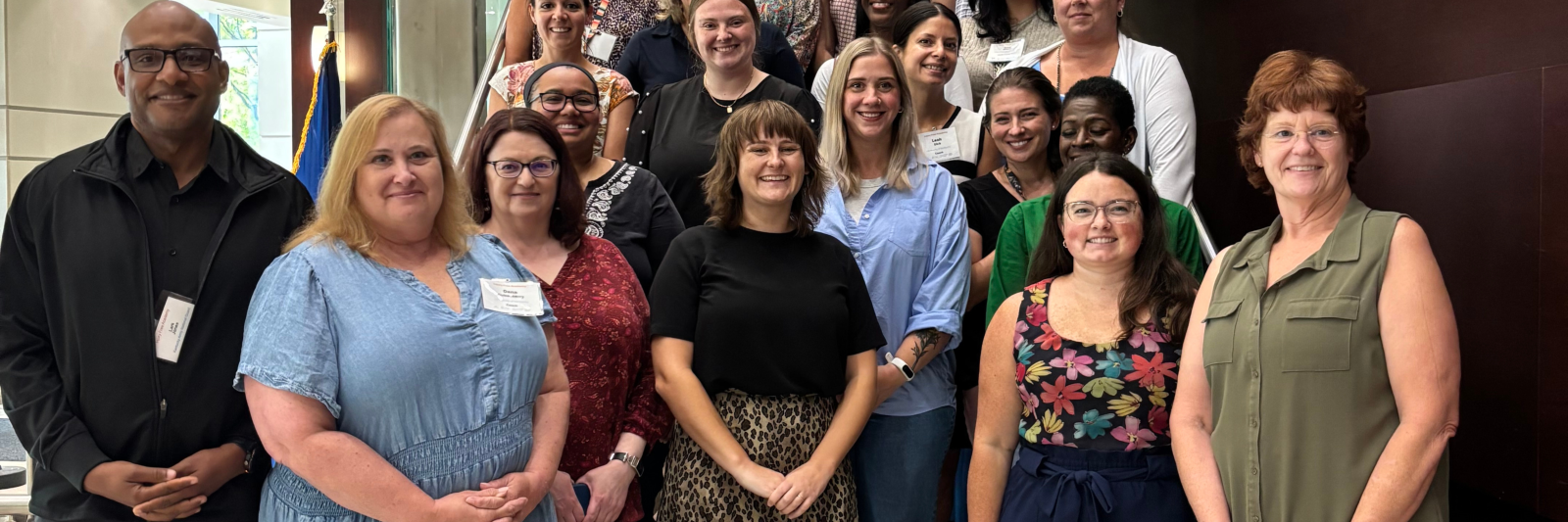
Kentucky Injury-Free Academy Concludes Inaugural Cycle with New Programs, Deeper Collaboration, and Lessons for the Future
The Kentucky Injury-Free Academy (KIFA), a statewide initiative led by the Kentucky Injury Prevention and Research Center (KIPRC), concluded its first cycle in September with a virtual showcase that highlighted the progress of multidisciplinary teams working to prevent violence in their communities.
Launched in May 2025, KIFA is modeled after the Injury-Free North Carolina Academy. It uses a Shared Risk and Protective Factors Framework to examine community-level risks—such as poverty—that contribute to violence, as well as protective factors—like access to resources—that help prevent it. This framework guides teams in creating strategies that address the root causes of violence in their local communities. Over three sessions—two in person and one virtual—seven teams from across Kentucky participated in collaborative planning, peer learning, and coaching support.
The final session featured a panel of guest speakers from the University of Kentucky College of Public Health who brought perspectives on sustainability, community engagement and resource development. Panelists included Keely S. Rees, PhD, MCHES, Associate Dean for Faculty and Staff Advancement; Heather M. Bush, PhD, Dean; and Logan Smart, Director of Philanthropy. Their insights encouraged teams to think about long-term impact and support and sustainability of their efforts beyond the Academy.
“This was a really nice way to close out the Academy,” said Catherine Hines, KIFA Program Manager. “Even though it was virtual, the energy and thoughtfulness from our teams and panelists made it feel incredibly connected.”
Participant Perspective
For Lori Droege, MPH, Director of Prevention & Public Education at The Ion Center for Violence Prevention, the Academy was a chance to bring colleagues from different departments into closer alignment. Her team was unique in that all members came from the same organization, which made internal collaboration the central focus of their experience.
“We’ve always worked toward common goals from different approaches, but now it’s much more intentional,” Droege said. “The Academy gave us the structure to connect regularly and plan together. That’s been my favorite part, feeling more connected to my colleagues and the work they’re doing.”
The Ion Center team designed a children’s program during the Academy that they plan to launch in early 2026.
“We’re really excited about it,” Droege said. “It’s one of the first new initiatives to come directly out of this training, and we’re eager to see it make a difference.”
Coaching Perspective: Tailoring Support to Unique Needs
Coaches played a critical role in guiding teams through the Academy. Dana Quesinberry, JD, DrPH, Assistant Professor, who worked with the National Guard team, emphasized the importance of cultural competency and sensitivity to military regulations.
“One of the team members was working on a project in financial services,” Quesinberry said. “The root causes discussion really allowed her to see that the financial program she wanted to implement was a distal risk factor to interpersonal violence among service members and their families.”
Her advice for future academies was for participants to really dig into what makes each team and the community it represents unique.
“Our implementation team was very thoughtful in their assignment of coaches to the teams based on the team’s unique qualities,” Quesinberry said.
Next Steps
Participants are already working on applying what they learned during the Academy. Some teams are exploring ways to replicate the model locally, while others are preparing to roll out new initiatives. “We’ve seen teams grow in confidence and creativity,” Hines said. “Now the real work begins as they take these ideas home and continue building. We want to see them stay connected, share lessons, and keep pushing forward together.”
KIFA’s inaugural cycle has proven that when organizations come together with shared tools and goals, they can chart a path toward safer, healthier communities.
KIPRC is a unique partnership between the Kentucky Department for Public Health (DPH) and the University of Kentucky’s College of Public Health. KIPRC serves both as an academic injury prevention research center and as the DPH’s designee or “bona fide agent” for statewide injury prevention and control.
This resource was developed using funds made available from Safe States through a cooperative agreement with the Centers for Disease Control and Prevention (Award # 1 NU49CE000001-02, CFDA 93.136). The views expressed in written materials or publications do not necessarily reflect the official policies of Safe States or the CDC, nor does the mention of trade names, commercial practices, or organizations imply endorsement by Safe States or the U.S. Government.